No credit isn't bad credit
If you've never had a loan or credit card in Canada, you don't have bad credit. You have a thin file, which means lenders have nothing to score you on yet. That's normal for first-time buyers, students, newcomers to Canada and people who've always paid cash. You can still get approved; lenders just look harder at other things.
What lenders look at instead of a credit score
- Your income and job. Pay stubs, an employment letter and how long you've been there. Even a few months at a steady job helps.
- A down payment. The bigger it is, the less the lender has at risk. With no credit history, 10% or more makes a real difference.
- How long you've lived here, and proof of your Saskatoon address.
- Your bank history. Statements showing regular deposits and bills paid.
- A co-signer, if you have one. Someone with good credit who agrees to be responsible for the loan can get you a better rate, but they're on the hook if you stop paying.
- The vehicle. A reliable, reasonably priced used vehicle is much easier to finance than an expensive one.
First-time buyers
Your first car loan is also how you build credit. Keep the price modest, put down what you can, and pay on time every month. Most car lenders report to Equifax, TransUnion or both, so a year of on-time payments gives you a real credit history and opens the door to better rates next time.
Before you shop, work out what you can afford with the car loan calculator, including insurance, fuel and winter costs, not just the payment.
New to Canada
Several major banks have car loan programs for newcomers, usually for people who've been in Canada three years or less. They typically ask for a larger down payment (often 10% to 25%), proof of status (permanent residence or a work permit) and proof of income. Lenders that focus on newcomers may also accept a shorter job history.
- Permanent residents usually have the most options.
- Work permit holders can often qualify too, but some lenders keep the loan term within the time left on your permit.
- Your licence: you'll need a valid licence to register and insure the vehicle. Check with SGI about exchanging a licence from another country.
- Your vehicle: if you've moved to Saskatchewan with a vehicle, you can drive on your old plates for up to 90 days. Register it with SGI before then.
Students
Students at the University of Saskatchewan or Saskatchewan Polytechnic can get approved, but lenders want to see income that will cover the payment: a part-time job, a co-op placement, or a co-signer. Keep the vehicle cheap and the term short, because your plans may change after you graduate. International students have fewer options and usually need a large down payment or a co-signer.
Want a better rate? Build a little credit first
If you can wait two or three months, a secured credit card or a small credit card used lightly and paid in full each month starts your file. It won't make you a prime borrower overnight, but it gives lenders something to look at.
Watch for these
- Upfront fees. You shouldn't have to pay to apply for a car loan.
- Pressure to buy more car than you need because "you're approved for it."
- Add-ons like warranties and payment insurance rolled into the loan without a clear price for each.
- Rates near the legal limit. The maximum on most consumer loans in Canada is 35% a year, including fees.
How Brenden helps
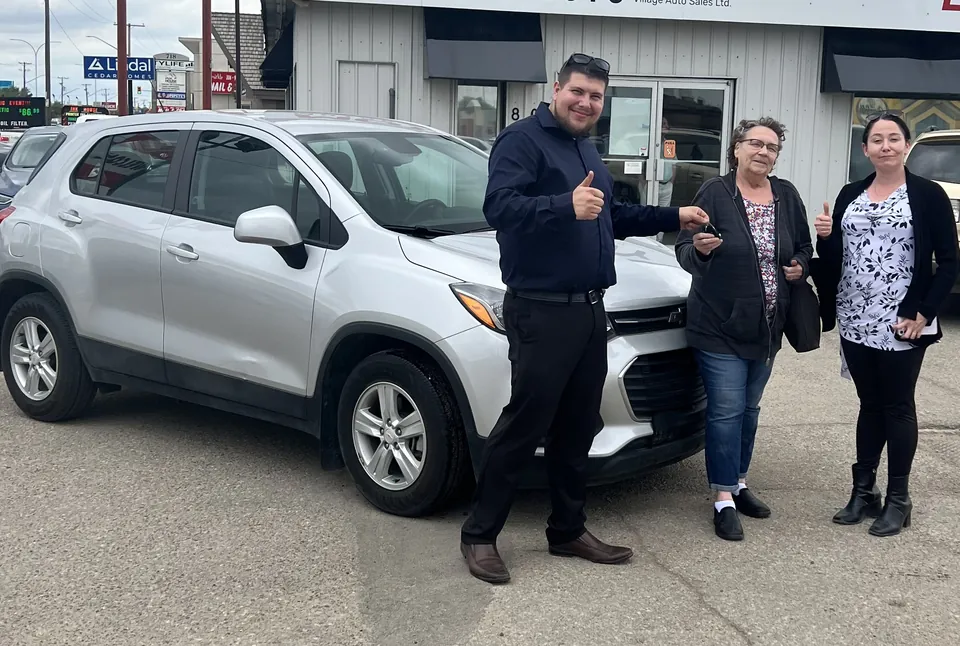
Brenden works with first-time buyers, students and newcomers in Saskatoon. Tell him your situation and he'll point you to the lenders most likely to approve you, explain what they'll ask for, and help you find a vehicle that fits the payment.